
The hardest problems, owned end to end.
Ventures, built on your terms.
MW supports founders building their own ventures, pre-seed to Series A. Senior, hands-on, scoped to discrete cycles with shipped artefacts. Run by Mark Goodchild, who has built and operated ventures himself.
Why most ventures fail before product-market fit.
Most ventures fail before they reach product-market fit. The reason is rarely a shortage of intelligence, ambition, or capital at the early stage. It is the absence of disciplined execution against a clear stage progression.
At each stage, the same failure repeats in a different form: Discovery runs long on the wrong problem, building accelerates before validation arrives, and operational rigour catches up too late to manage early Traction. The temptation is to keep iterating on what was working in the previous stage, rather than honestly cross the threshold into the next.
The MW Ventures Framework is built on the same operating machinery MW uses for enterprise engagements, applied to the realities of founder-led building by someone who has done it.
The MW Ventures Framework.
Three foundational artefacts at three venture stages. A twenty-minute Diagnostic that identifies which stage you are at and which artefact you need first. Engagement sized to founder budgets and founder timelines, with the honest position that MW is not the right call for every venture.
Discovery stage entry
Venture Clarity
Three days to get honest about what you are building, who it is for, what evidence you have, and what would change the picture. Produces a written Venture Brief and a five-experiment list for the next ninety days.
Build stage entry
Build Brief
Five days producing a build specification for the MVP: feature scope, technical architecture, vendor decisions, commercialisation model selected, and a thirty-day path to first paying customer.
Traction stage entry
Growth Review
Five days reviewing the path to scale. Which channels are working, which are noise, where the unit economics break, where capability gaps will surface in the next twelve months. Produces a Growth Plan and a position document for the next funding round.
Different from accelerators and advisers.
Accelerators run cohort programmes: equity for capital and mentorship, twelve to sixteen weeks, demo day at the end. Fractional CTOs and advisers offer senior part-time presence in exchange for equity or retainer. Both have their place, and both shape what the venture becomes in ways that founders eventually have to live with.
The MW framework works on different terms: three foundational artefacts at three stages, each a contained engagement with a defined output, priced in cash and scoped to the founder’s calendar and budget. Founders choose MW when they need a specific foundational artefact to cross a specific stage threshold, with the cap table and the commercial independence intact on both sides.
What stage is your venture at?
Stages describe what a venture has right now, in terms of evidence, product, and customers. The framework identifies the stage and routes the founder to the right entry artefact.
Stage 1
Discovery
Pre-product, hypothesis-led.
You have an idea or a hypothesis. Some customer conversations. No working product. The investment thesis is still being formed. Capital is typically self-funded, friends-and-family, or pre-seed if external capital has been raised.
Ventures Diagnostic → Venture Clarity (3 days) → MVP Build Sprint (8–12 weeks) → Scale Advisory
Stage 2
Build
Validation in hand, MVP underway.
You have validation evidence: a paid pilot, a signed letter of intent, a clear willingness-to-pay signal. Working prototype or early product. Capital allocated to building, not yet to growth.
Ventures Diagnostic → Build Brief (5 days) → Production Build Sprint (12–16 weeks) → Scale Advisory
Stage 3
Traction
In-market, scaling pressure.
Product in market. Some paying customers. Growth happening but not yet repeatable. Seed deployed, Series A in conversation. The job is now to find what scales and what does not.
Ventures Diagnostic → Growth Review (5 days) → Growth Sprint (8–12 weeks) → Scale Advisory
How MW works with founders.
Founder-led, MW-supported.
The venture is yours. MW supports the work, builds with you, and steps back when the venture can carry itself. Every engagement is led directly by Mark Goodchild, who has built and operated ventures himself.
Cash terms by default.
Engagements are priced in cash, scoped to a fixed deliverable. Equity participation is available where it makes sense for both parties, but it is the exception. Cash terms protect both sides: you retain the cap table, MW retains commercial independence.
Honest about fit.
Where MW would not yet add value, the Diagnostic recommendation is a clear not yet with specific advice on what to do instead. About one venture in five gets a not yet answer.
Short cycles, sharp outputs.
Engagements are time-boxed. The framework is built around three to twelve weeks of work at a time. Founders cannot afford long engagements, and most venture work is best done in short, sharp cycles.
Who this is built for.
This framework is built for founders running their own ventures. Pre-seed to Series A, typically. First-time founders and second-time founders both. Solo founders and small founding teams. Software ventures and non-software ventures, though most MW ventures work has been technology-led.
It is not built for corporate venture teams or internal innovation programmes. That work sits in the MW Innovation Framework, built for the corporate operating environment. The boundary matters because the failure modes differ: founders fail by running out of capital before validation; corporate ventures fail by getting absorbed into BAU before they can prove themselves. Different problems, different frameworks.
Start with a Diagnostic.
Every MW venture engagement begins with the same twenty-minute call. Five questions. One named recommendation: which of three artefacts to commission, or an honest not yet with specific advice on what to do instead.
No charge. No follow-up unless you want it. Run personally by Mark Goodchild.
Not ready for a call? Notify me when MW publishes the next briefing.
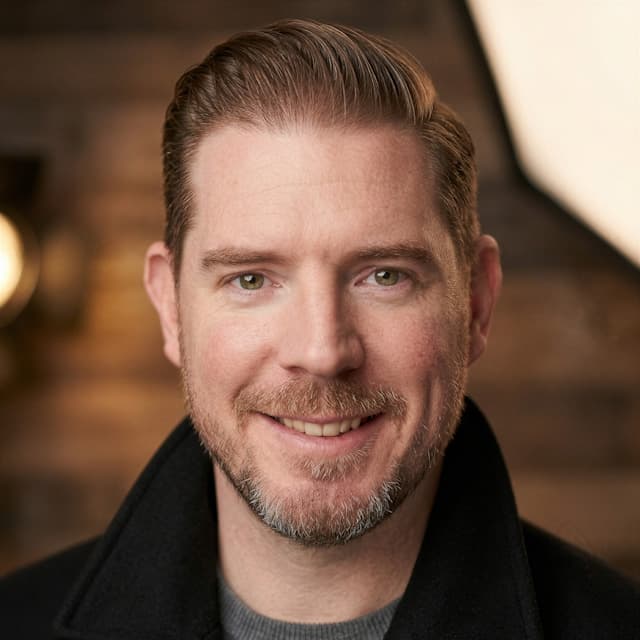
About Mark Goodchild
Mark is the founder of MultipleWorks. Twenty-five years across financial services, media, government, energy, telco and retail, including eleven years at EY where he led the APAC Digital and Emerging Tech Consulting practice. He has co-founded a hospitality venture and built a pre-Series A startup himself.
Mark runs every Diagnostic personally. Every Venture Clarity engagement. Every Build Brief. The person on the call is the person delivering the work.