
The hardest problems, owned end to end.
AI that knows your business.
MW builds the foundations that turn generic AI into institutional capability you can govern and defend: what it knows, what it is permitted to say, and a record of what it actually said. Built to the bar that risk, audit and the regulator will set. Senior-led, hands-on, foundational artefacts in days and builds in weeks.
Why your AI underperforms.
Enterprise AI underperforms because the system does not know the business. The model is technically competent and substantively shallow. It does not know your products, your processes, your customers, or your history, and no amount of prompt engineering compensates for the absence of institutional knowledge.
Most organisations respond by buying more AI: more vendors, more pilots, more tools. The shortfall persists because the gap is not at the model layer; it is in what the model knows about you. Senior staff start routing the work that matters to personal accounts that have quietly accumulated context for months. Shadow AI fills the gap, corporate IP leaks out of the network in copy-paste fragments, and the corporate AI investment depreciates in plain sight.
The same gap carries a second cost. A system that does not know the business cannot be governed: you cannot attest to what it knows, control what it is permitted to say, or evidence what it actually said. That is the failure that surfaces the moment risk, audit or the regulator looks.
The MW AI Framework is the operational answer to that gap. Four foundational artefacts, three maturity levels, one entry point.
The MW AI Framework.
Four foundational artefacts address four dimensions of AI capability: the strategic decisions, the kinds of knowledge in play, the technical architecture, and the operating governance. A three-level maturity model tells you which artefact to commission first.
the strategic decisions
Decision Record
Five foundational decisions made deliberately rather than by default: data residency, vendor dependencies, on-premises posture, governance timing, personal knowledge handling.
the four kinds of knowledge
Knowledge Inventory
A mapping of your AI deployments against four kinds of knowledge: General, Organisational, Personal, and Current. Identifies which kinds your deployments cover, which they ignore, and where the highest-impact omissions sit.
the technical architecture
Architecture Brief
Three architectural layers documented: the model layer, the protocol or policy layer, and the experience layer. Surfaces the missing middle layer where most enterprise AI lacks a portable, auditable form for its business rules.
the operating governance
AI Operating Model
Governance of the AI portfolio: five rituals attached to the lifecycle gates, named accountability, regulatory mapping, and the operating rhythm that holds the portfolio together over time.
Different from existing maturity models.
The conventional AI maturity model is Gartner’s: five stages from Awareness through Transformational, scored across seven pillars to produce a number from one to five. It works as a measurement instrument. As an action instrument it is limited, because a Stage 2 organisation receives a roadmap, and the work of producing the actual artefacts begins after that, somewhere else.
The MW framework operates differently. It identifies which of four foundational artefacts your organisation has not yet produced, and produces them. The diagnosis converts to action without an intermediate strategy phase.
Where are you on the curve?
Three patterns recur across the AI engagements MW takes on. Identify yours, and the right entry artefact follows.
Level 1
Considering
Pre-deployment, or consumer-grade use only.
You have not yet deployed production AI. Vendor conversations are underway. Procurement is asking harder questions than the team can answer. The five foundational decisions sit ahead of the organisation, and none have been made deliberately.
AI Diagnostic → Decision Record (5 days) → Deployment Sprint (8–10 weeks) → Retained AI Ops
Level 2
Deployed
Production AI running, vendor-configured.
You have one or several deployments in production, configured largely by vendors. The outputs are competent and shallow, with the team learning to work around the gaps rather than close them. Shadow AI is no longer hypothetical, and the gap between what the model is capable of and what your business actually needs is widening.
AI Diagnostic → Knowledge Inventory (5 days) → Knowledge Layer Sprint (6–8 weeks) → Retained AI Ops
Level 3
Scaled
Multi-vendor, governance under pressure.
You have AI across multiple functions and vendors. Governance is under regulatory pressure. Audit findings are mounting, or a formal review is on the horizon. Shadow AI is a recognised governance problem with documented findings, and the architecture cannot continue to scale on its current shape.
AI Diagnostic → Architecture Brief (8 days) → Architecture Build (8–12 weeks) → Retained AI Ops
How MW works on AI.
Senior-led.
Every engagement is led directly by Mark Goodchild. Twenty-five years of innovation and transformation experience, including eleven at EY leading Fortune 500 work. The person on the call is the person doing the work.
Embedded.
Artefacts are produced alongside your team, not delivered to them. When MW leaves, the capability sits in your people.
Hands-on.
The output is the working artefact. Production engagements have shipping code as their measure of success.
Honest.
Where engaging MW would not yet pay back, the Diagnostic recommendation is a clear not yet with specific advice on what to do next.
Start with a Diagnostic.
Every MW AI engagement begins with the same thirty-minute call. Seven questions, scoped to your maturity. One named recommendation delivered in the room: which artefact, what it costs, how long it takes. Or an honest not yet with specific advice on what to do instead.
No charge. Run personally by Mark Goodchild.
Not ready for a call? Notify me when MW publishes the next briefing.
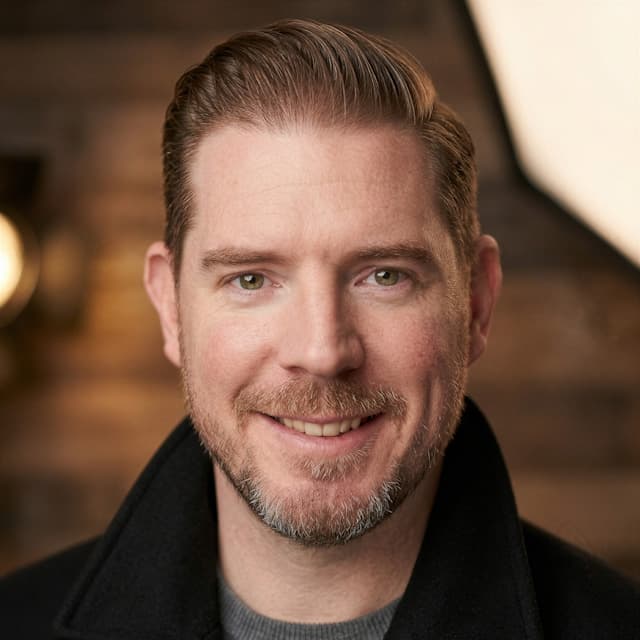
About Mark Goodchild
Mark is the founder of MultipleWorks. Twenty-five years across financial services, media, government, energy, telco and retail, including eleven years at EY where he led the APAC Digital and Emerging Tech Consulting practice. He has built and operated production AI for Fortune 500 clients, co-founded a hospitality venture, and built a pre-Series A startup.
Mark runs every Diagnostic, every Framework engagement and every SOW personally. The person on the call is the person delivering the work.